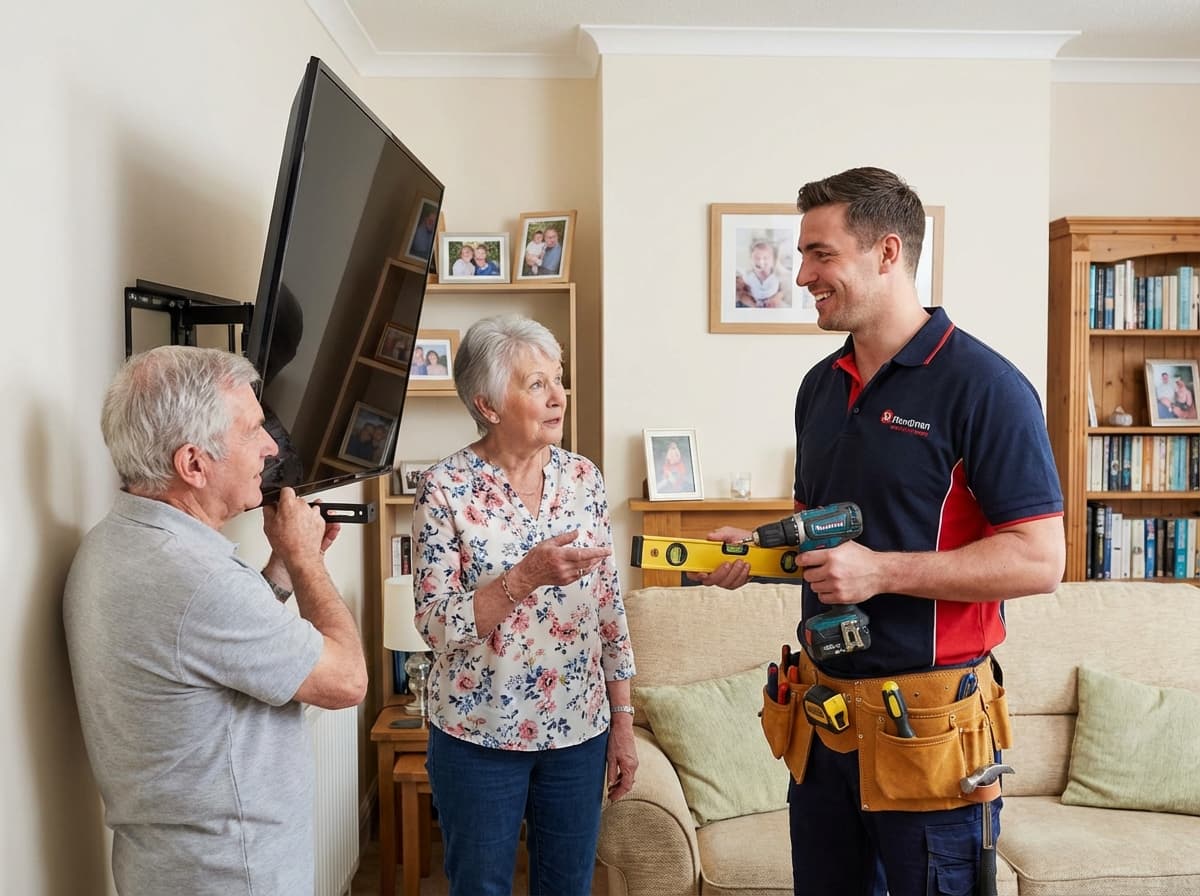
Ask for a name and ID, confirm the appointment, get the scope in writing, ask about background checks, and know what to do if something feels wrong.
Before anyone you do not know comes into your home, confirm their name, who they work for and that you booked them. Ask to see ID, put the scope in writing, and ask how the business screens its workers. If anything feels off, do not open the door, and report it to the Illinois Attorney General.
How do I know who is coming?
Ask these before the visit, in a text or email so you have a record:
- Who is coming? Get a first and last name. If the person changes, ask to be told ahead of time.
- How many people? Ask whether anyone else is coming, such as a helper.
- What company are they with? Get the business name, address and phone number.
- When will they arrive? Ask for a time window.
- What vehicle? Some people ask for a description or a plate number so they can match it at the curb.
The Better Business Bureau's guide to hiring a contractor says to ask about training, certifications and background checks for the company's employees or subcontractors, and to ask what kind of identification they will show when they arrive at your home.
How do I confirm the appointment is real?
You should be the one who set up the visit. Be cautious if someone shows up you did not call.
The Illinois Attorney General's home repair fraud page lists these warning signs:
- Unsolicited door-to-door salespeople with no local connections who offer to do repair work for much less than market price.
- A company that lists only a phone number or P.O. box.
- Someone who offers to inspect your home for free without authentic identification establishing their business status.
- A contractor who refuses to provide proof of insurance and references.
- Demands for cash or full payment before the job is done, or a check payable to a third party.
- A contractor who offers to drive you to your bank to withdraw money.
If someone you did not call says they are "in the neighborhood" or says something is wrong with your roof, gutters or chimney, you do not have to let them in or decide that day. Say you will call a company you choose. For storm-season examples, see How do I avoid contractor scams after a storm?
What should I ask to see when they arrive?
- Photo ID that matches the name you were given. Look at the photo and the name.
- A business card or a text from the business that matches the booking.
- A written scope that matches your list.
It is fine to say, "I need to check this before you come in." A real professional expects it. If the person pushes back or gets upset, close the door and call the business using the number you already had, not one they give you.
What should the scope say, and why put it in writing?
A written scope protects both sides. It should list:
- Each task and where in the house it is done.
- Which areas the worker will be in, and which stay off limits.
- Who supplies the materials.
- How the price is set, and what the total or the cap is.
- The date and time window.
The Attorney General's page says a home repair contract should include the contractor's full name, address and telephone number, a description of the work, start and estimated completion dates, the total cost, and the schedule and method of payment. For work of $1,000 or more, see What does the Illinois Home Repair and Remodeling Act require?
If someone proposes extra work once they are in your home, ask for it in writing before you agree. Do not sign anything you have not read. The Attorney General also says that if a contract is made and signed at your home, you have three business days to cancel, and seniors over 65 have up to 15 business days. The federal Cooling-Off Rule from the Federal Trade Commission similarly requires door-to-door sellers to give disclosures about your right to cancel within three business days.
What can I ask about background checks?
Ask the business how it screens the people who will enter your home, and listen to the specifics. Useful questions:
- Do you run background checks on everyone who works in customers' homes? Who does them, and when?
- Does the person who will come to my house work for you directly, or are they a subcontractor?
- Will you tell me in advance if someone different is coming?
Do not assume a screening happens because a business looks professional. A company that says it does background checks should be able to tell you who is covered. If the answer is vague, you can decide whether to proceed, ask for a different arrangement, or choose someone else.
How can I make a visit safer for my household?
- Be home, or have a trusted adult home, for first visits.
- Put valuables, medications, mail and documents away before the visit and keep them out of the work area.
- Tell the worker which rooms are in scope. Keep children and pets in another room.
- Share only what the job needs. Do not give out your alarm code, bank details or Wi-Fi password.
- Pay by a traceable method, and not before the work is done. The Attorney General warns against cash and full payment before completion.
- Keep a record: the quote, the text exchange, the name of the person who came.
What if something is wrong?
1. If you feel unsafe, do not let the person in, or ask them to leave. If there is an immediate threat, call 911.
2. Do not pay or sign anything under pressure.
3. Write down the name, company, vehicle and plate, time, and what was said.
4. Report it. The Illinois Attorney General's Consumer Fraud Bureau takes complaints on its File a Complaint page, and its helplines are 1-800-386-5438 (Chicago), 1-800-243-0618 (Springfield) and 1-800-243-0607 (Carbondale). You can also check a business's record and file a complaint with the BBB of Chicago and Northern Illinois.
5. Tell your village or city if someone solicited door to door. Local rules vary, so ask your building or police department what they want to know.
For more on checking a handyman before you book, see How do I vet a handyman on the North Shore? and How do I check that a handyman is insured in Illinois?
Who is Enhaus?
Enhaus is a family-owned business run by Natasha and Eduard Semenenko, who live locally. When you send your list, you are dealing with the people who run the business. This article is general safety advice. It does not describe screening, insurance or licensing, so whoever you hire, ask the questions above and get the answers in writing.
FAQ
Is it rude to ask a handyman for ID?
No. The BBB suggests asking what identification they will show when they arrive. A professional will not mind.
Should I let in someone who knocks and says my house needs repairs?
No. The Attorney General warns about unsolicited door-to-door repair offers and free inspections without authentic ID. Say you will call a company you choose.
Can I cancel a repair contract I signed at home?
The Attorney General says you have three business days to cancel a contract made and signed at your home, and seniors over 65 have up to 15 business days. Read the cancellation notice in your paperwork.
Should I be home during the work?
For a first visit, yes, or have a trusted adult there. Agree on the rooms in scope beforehand.
To send your list and photos, call or text (847) 877-1877.